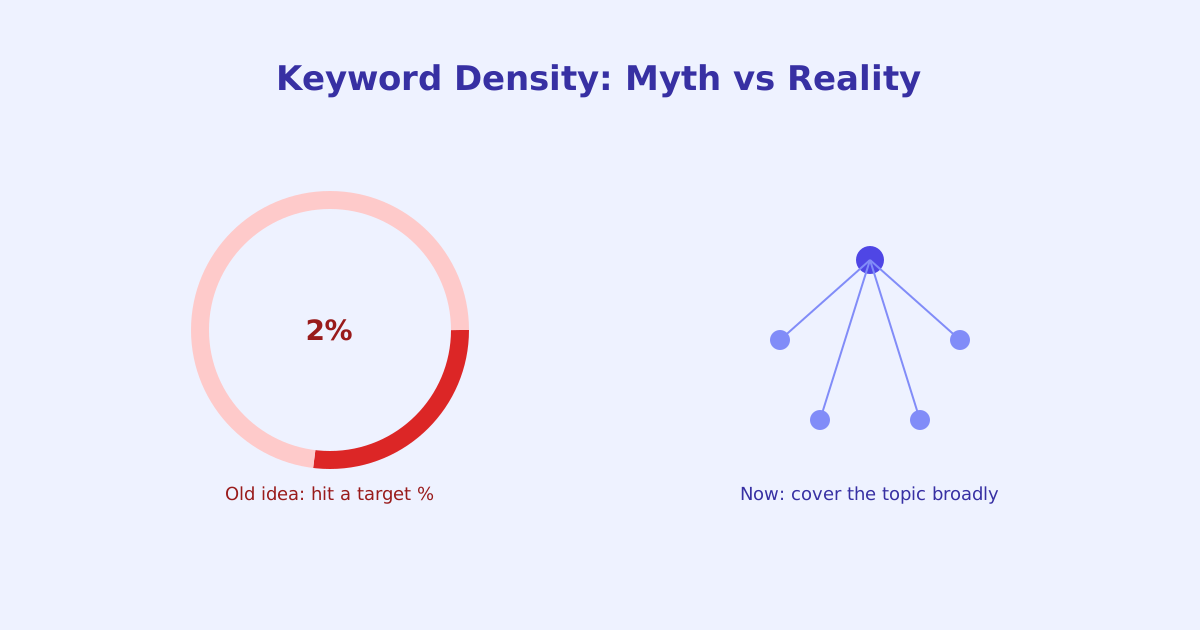
Keyword density has one of the longest afterlives of any SEO concept: a specific percentage to hit, usually somewhere between 1% and 3%, repeated across SEO advice for so long that plenty of people still treat it as a real, checkable ranking requirement. It largely isn’t, and hasn’t been for a long time. This guide covers where the idea came from, why it never worked the way it was described, and the narrow situations where checking it is still genuinely worth doing.
- There has never been a documented target keyword density percentage that search engines check pages against
- Pushing density up deliberately risks keyword stuffing, which reads poorly for visitors and has been specifically targeted by search engines
- Modern search systems evaluate topical relevance through broader coverage of related terms and concepts, not repetition of one exact phrase
- Some SEO tools still report a density percentage simply because it's easy to compute, not because it's been shown to move rankings
- A density check still has narrow practical value as a sanity check on very short pages, not as a target to optimize toward
Where the Keyword Density Idea Actually Came From
The idea that a page needs a specific percentage of its content to be an exact target keyword traces back to an earlier era of both search technology and SEO tooling, when simpler text-matching played a larger relative role in how pages were evaluated. Early SEO software popularized density calculators and target ranges, and the advice calcified into folk wisdom that’s persisted long after the underlying technology it was based on moved on.
Search engines have never published an official target density figure, and there’s a structural reason for that: publishing one would immediately become a number to exploit, which would make it useless as a genuine quality signal within a short amount of time.
The Real Risk Is on the High Side, Not the Low Side
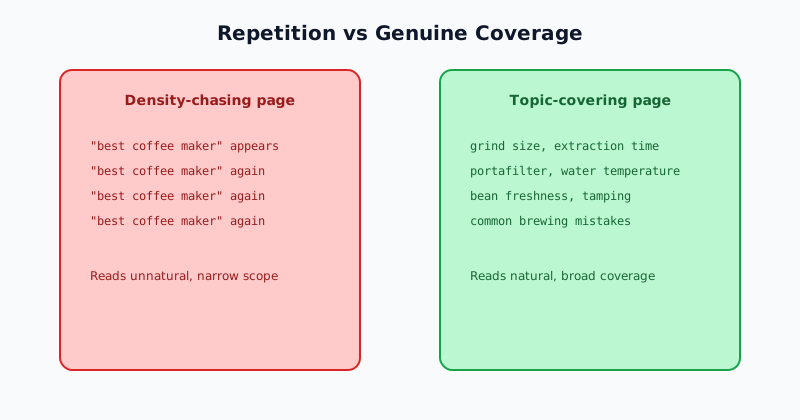
Where keyword density advice actively backfires is when it’s followed literally, deliberately repeating an exact phrase enough times to hit a target percentage. This produces keyword stuffing, text that reads as obviously written for a crawler rather than for a person, with the same short phrase appearing at an unnatural frequency. Search engines have specifically targeted this pattern, but honestly, the more immediate cost is simpler: stuffed content just reads worse, and a visitor who notices unnatural repetition trusts the page less and is less likely to act on it, independent of anything an algorithm does.
There’s no equivalent risk on the low side in the way the old advice implies. Writing naturally about a topic without consciously tracking a repetition count doesn’t create some invisible ranking penalty for being “under” a density threshold, because that threshold was never a real, enforced number to begin with.
What Actually Replaced It: Topic and Entity Coverage
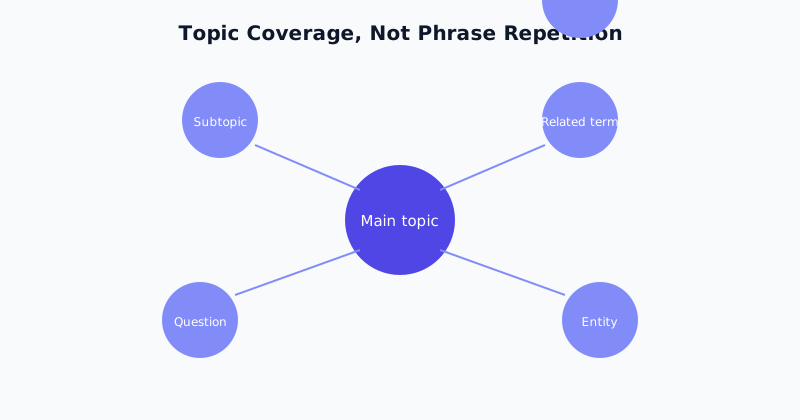
Modern search evaluation leans much more heavily on understanding what a page is actually about, which subtopics, related terms, and likely follow-up questions it addresses, rather than counting occurrences of one exact string. A thorough page on, say, home espresso machines naturally uses a wide vocabulary around that topic, grind size, extraction, portafilters, water temperature, without any of those terms needing to hit a specific repetition target individually. That natural breadth is a far closer match to how relevance actually gets evaluated today than any single phrase’s density ever was.
This is also, not coincidentally, simply better writing. Content that thoroughly covers a topic’s real subtopics tends to be more useful to an actual reader than content optimized around repeating one phrase a calculated number of times.
Why Some Tools Still Report a Density Percentage
If keyword density isn’t a real ranking factor, it’s fair to ask why density calculators still exist and get used at all. Mostly it comes down to being an easy, mechanically simple thing to compute and display, count occurrences of a phrase, divide by total words, no understanding of topic or meaning required. That doesn’t mean the number is meaningless to look at, it’s just not a target to hit. The one place it still has genuine, narrow value is as a sanity check on very short pages, where a repeated phrase’s ratio to total word count can swing to an obviously excessive level quickly without anyone intending it, more a smell test than an optimization target.
Checking Density and Text-to-HTML Ratio Without Overweighting Them
Used correctly, as a sanity check rather than a target, a density figure can still flag content that’s drifted into obviously repetitive phrasing, especially on shorter pages. The Keyword Density Checker reports exactly that percentage for a given phrase against pasted content, useful as a spot check rather than a goal to optimize toward. A related but distinct metric, the Text-to-HTML Ratio Checker, measures how much of a page is actual visible text versus surrounding markup, which speaks to page weight and content substance rather than keyword usage at all, worth understanding as a separate concept even though the two are often mentioned in the same breath.
The short version
Keyword density was never a real, documented ranking factor, it’s a piece of SEO folk wisdom that outlived the earlier, simpler search technology it was loosely based on. Deliberately chasing a density target risks keyword stuffing, which damages both algorithmic and human trust in a page, while writing with no density target at all carries no equivalent penalty. What modern search evaluation actually rewards is thorough coverage of a topic’s real subtopics and related terms, which is both a better match for how relevance gets evaluated today and, not coincidentally, simply better writing for an actual reader.