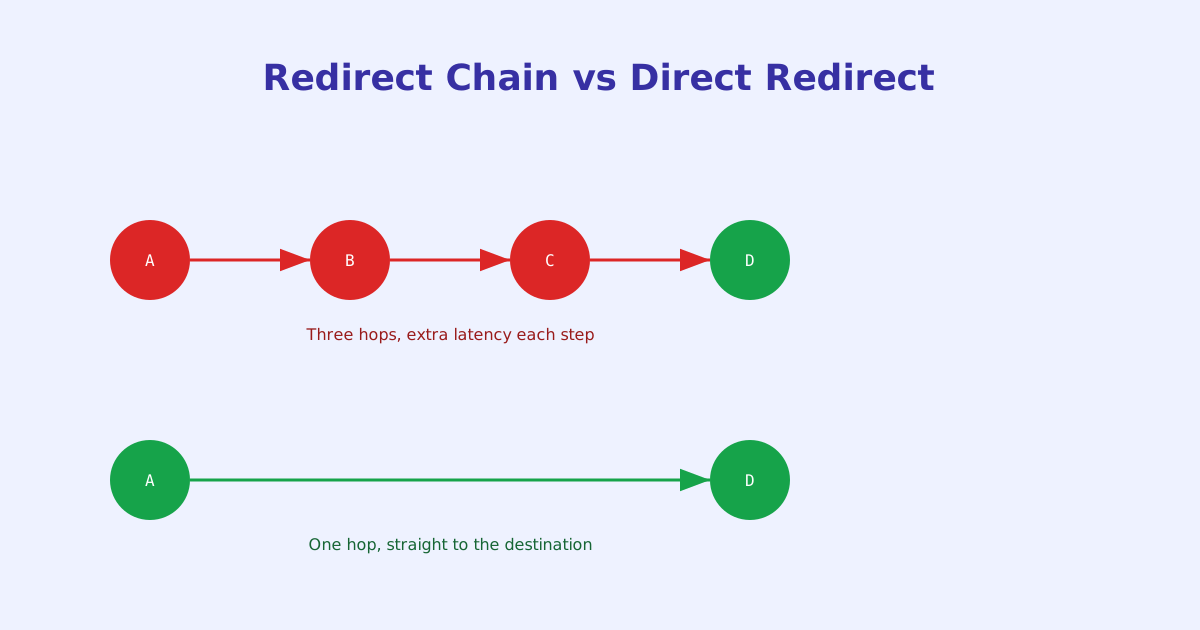
A redirect chain doesn’t announce itself the way a broken link does. Every page in the chain still loads, a user or crawler just gets bounced through several extra stops before arriving. That invisibility is exactly why chains tend to accumulate unnoticed over years of site changes, and why tracing one down is worth doing even when everything appears to be working.
- A redirect chain is two or more sequential redirects between a URL and its final destination, rather than one direct hop
- Each extra hop adds latency for users and consumes crawl budget for search engines, without producing any visible error
- Chains usually form gradually, as separate redirects set up at different times end up stacked on top of each other
- A redirect loop, which never resolves, is a stricter and worse failure than a chain, which eventually does reach a destination
- The fix is almost always the same: point the original URL directly at the true final destination, skipping every intermediate hop
What a Redirect Chain Actually Is
A single redirect, URL A sending a browser or crawler straight to URL B, is normal and harmless. A chain forms when B is itself also a redirect, sending things on to C, which might redirect again to D. The end user or crawler eventually reaches the real final page, just after several unnecessary stops along the way instead of one.
How Chains Form Without Anyone Meaning To Create One
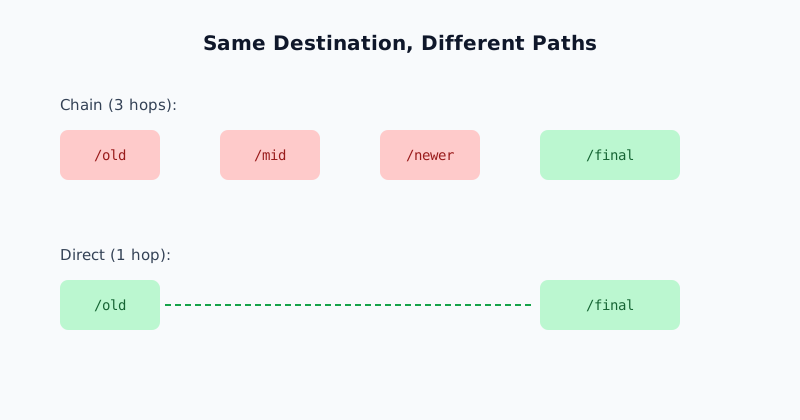
Chains rarely get built on purpose. They accumulate over time, typically through a pattern like this: a page moves, and a redirect is set up pointing its old URL to the new one. Months or years later, that new URL moves again, and a second redirect gets added, pointing the newer URL to yet another destination. Nobody goes back and updates the original redirect, so it now points to a URL that itself redirects onward, forming a two-hop chain where there was previously just one clean redirect.
This is especially common on sites that have gone through a URL structure change, a CMS migration, or repeated small reorganizations over the years, since each individual redirect made sense in isolation at the time it was created. The chain is a side effect of accumulated history, not a single mistake.
Why Each Extra Hop Has a Real Cost
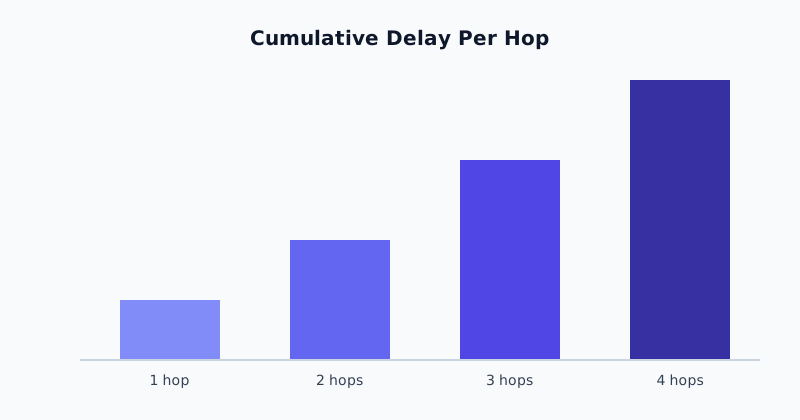
Every hop in a chain requires its own full network round trip before the next request can even begin. A single extra redirect might only add a small delay in isolation, but that delay is pure overhead added before any actual page content starts loading, and it compounds with every additional hop in the chain.
For crawlers, the cost shows up differently but is just as real: every hop consumes part of a site’s crawl budget, the finite amount of crawling a search engine allocates to a site in a given period. A crawler encountering a long chain either spends disproportionate budget working through it, or in extreme cases, gives up before reaching the final page at all, meaning that page’s content and any links it passes never actually get processed.
Chains vs. Loops: Not the Same Failure
It’s worth distinguishing a chain from a loop, since they’re related but not equally severe. A chain always eventually reaches a real destination, just through more hops than necessary. A loop never resolves: URL A redirects to B, which redirects back to A, or through some longer cycle that eventually returns to a URL already visited earlier in the same request. Browsers and crawlers will eventually abandon a loop outright, which is strictly worse than a chain’s extra delay, since a loop means the destination is never reached at all.
Tracing and Fixing a Chain
Fixing a redirect chain is conceptually simple once it’s actually been identified: update the original URL’s redirect to point directly at the true final destination, skipping every intermediate hop entirely. The harder part is the identification itself, since a chain is invisible from the outside, both the browser and a basic link checker will simply show the final destination loading successfully, with no obvious sign of how many hops it took to get there.
The Redirect Chain Checker follows a URL through every hop it makes, showing the full sequence of intermediate redirects and the status code returned at each step, so a chain that would otherwise be invisible becomes a clear, traceable list of exactly what to fix. If the concern extends to how crawlers are treated more broadly on the same site, the Robots.txt Tester covers that separate but related layer of crawl behavior.
The short version
A redirect chain is what happens when a URL passes through two or more sequential redirects instead of one direct hop to its final destination, and it usually forms gradually as separate, individually reasonable redirects end up stacked on top of each other over time. Each extra hop adds real latency and consumes crawl budget without producing any visible error, which is exactly why chains tend to go unnoticed until something actually traces the full path. The fix is almost always the same once a chain is found: point the original URL straight at the real final destination.